Ever since the birth of the smartphone, have you found yourself using apps to perform more tasks such as making lunch reservations and booking movie tickets? With increasing digitalisation, more services are being made available on apps. Government services have also jumped on the bandwagon, made easier with the introduction of government mobile apps. These days, you can easily reschedule your medical appointment or check your Central Provident Fund (CPF) statement with mere swipes and clicks on your smartphone.
Interested to understand how Singapore residents find out and use general and government apps, we at RySense conducted a survey with 2,100 respondents from our online panel, HappyDot.sg, in January 2021. Here are some highlights from our findings:
How do people find out about apps?
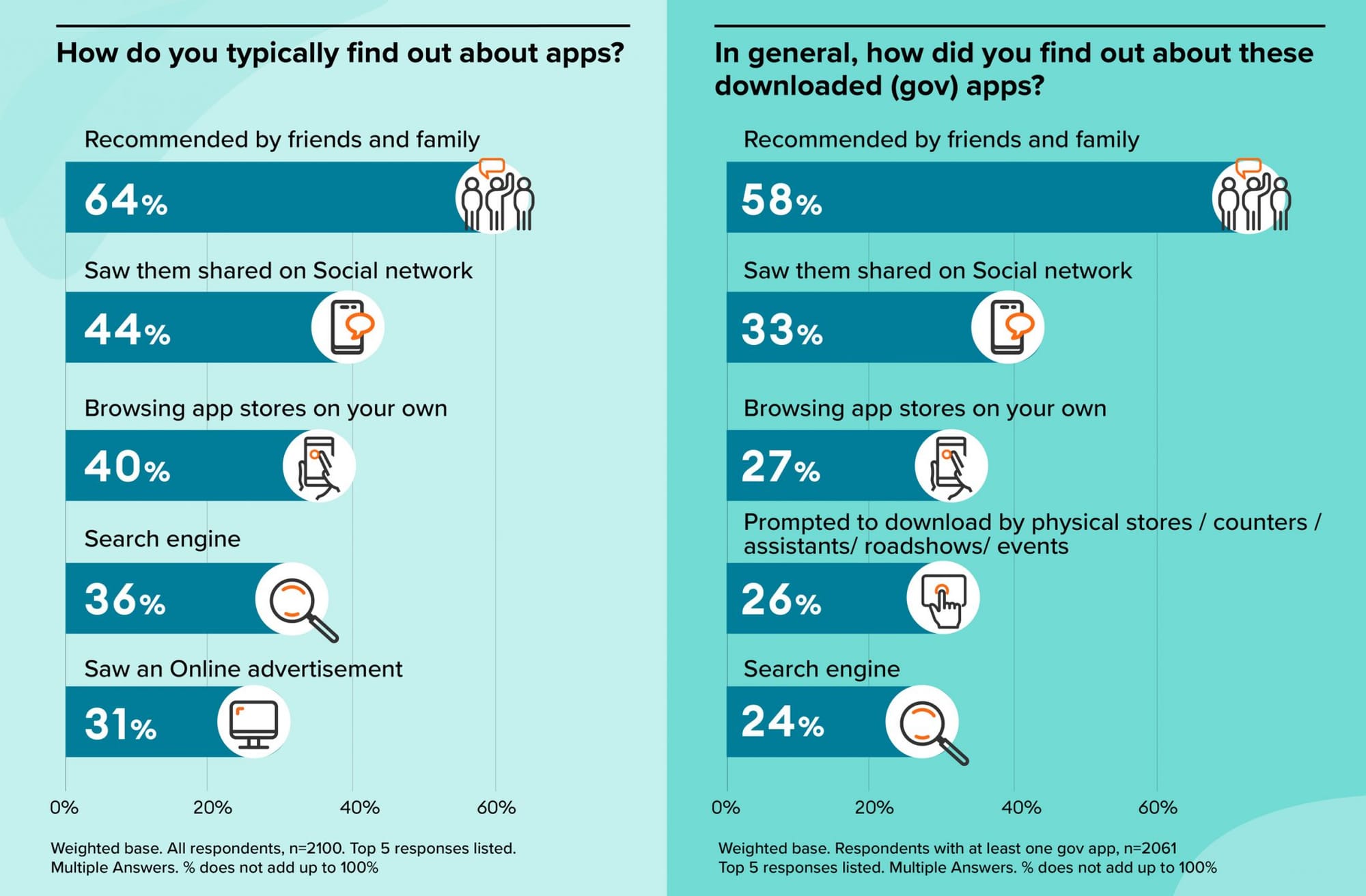
Usually it is through word of mouth from those who are close to you. it’s therefore no surprise that the top two ways that people find out about general and government apps are recommendations by friends and family and seeing them shared on their social network.
What do people prioritise when using government apps?
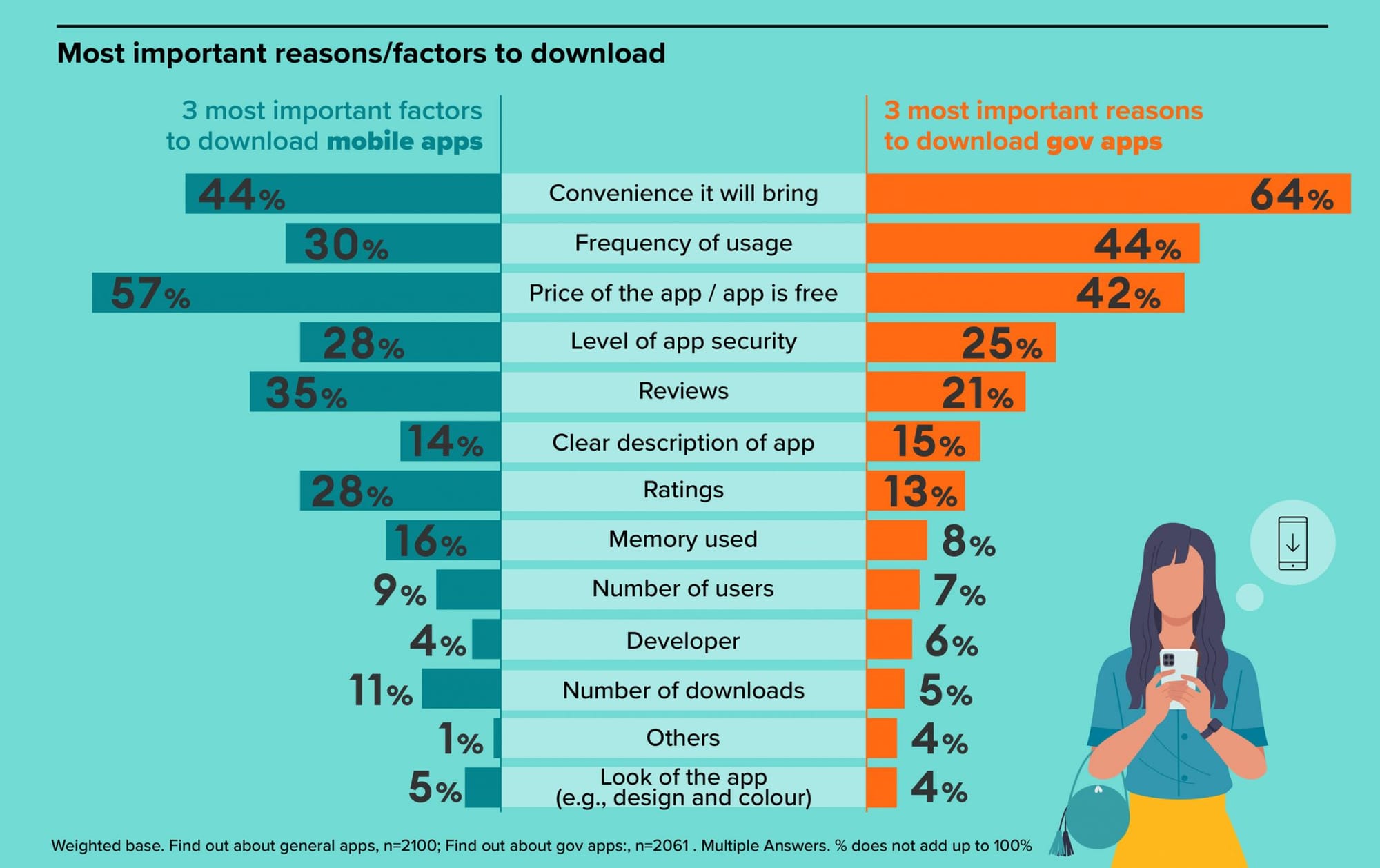
The two most important reasons why people download government apps are for convenience and frequency of usage. These are also more important reasons for downloading government apps as compared to general apps.
What are government apps most used for?
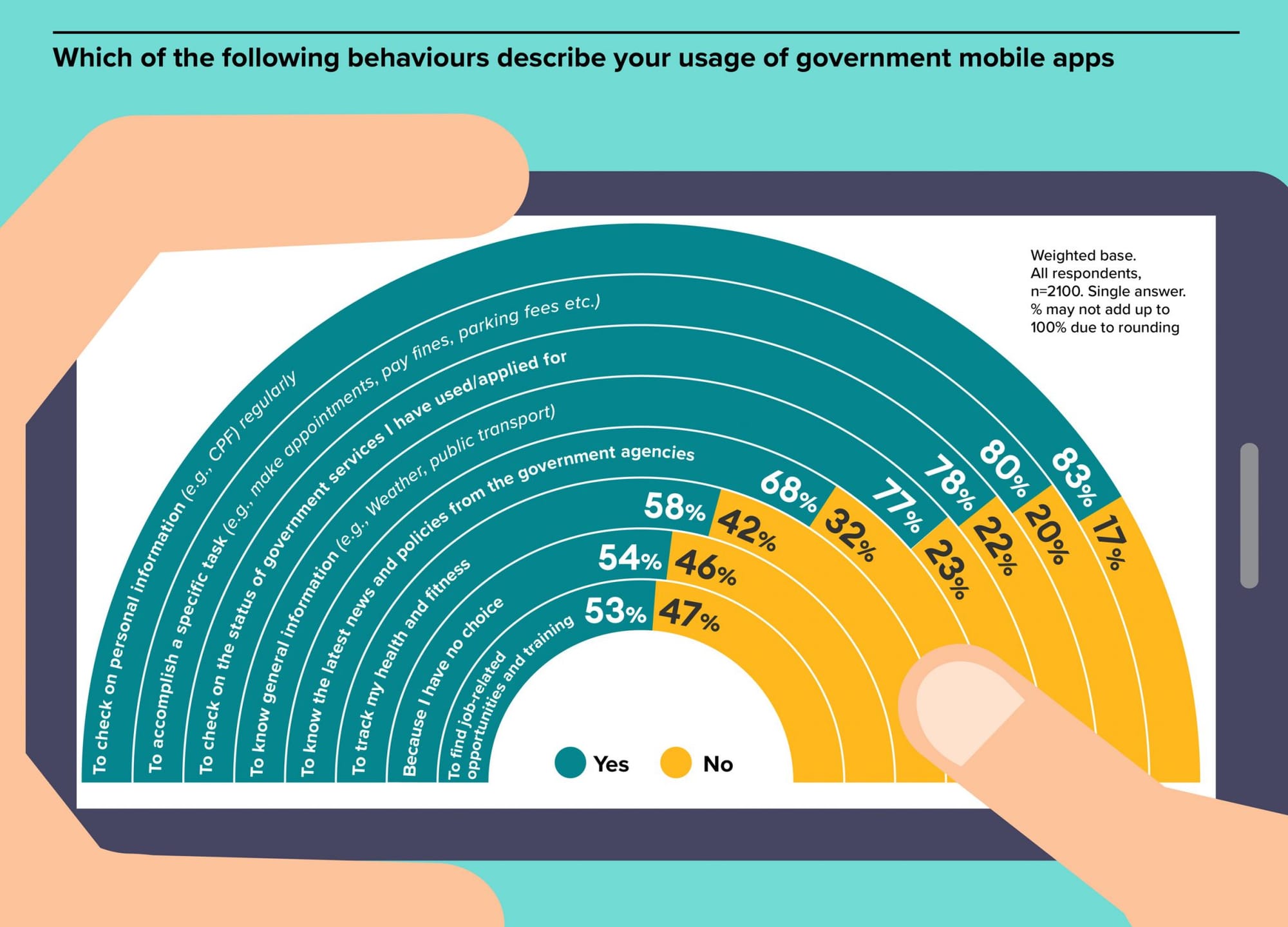
More than three-quarters use government apps to check on personal information, perform specific tasks, check on the status of services they applied for and to find out general information.
What drives government app usage?
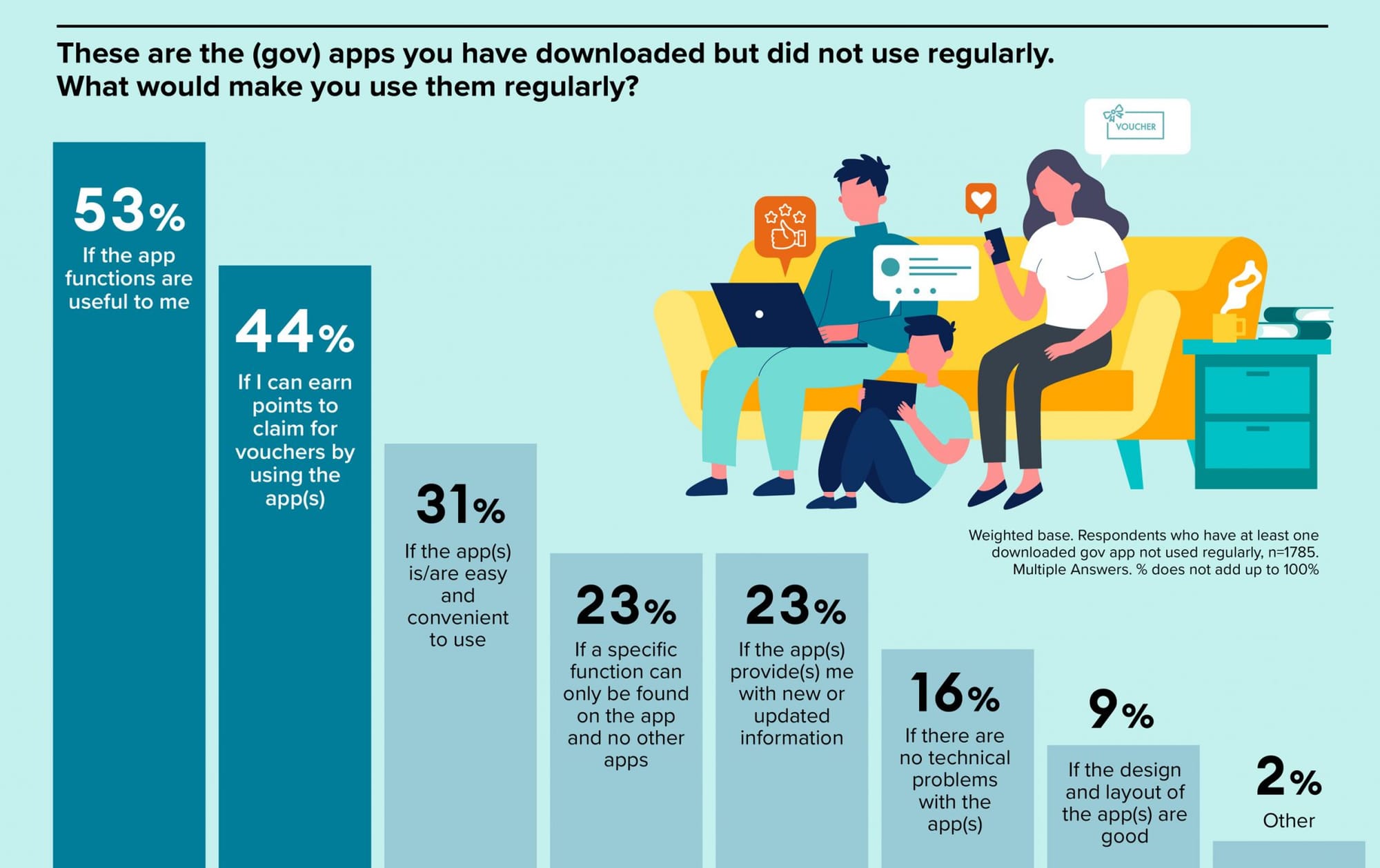
While people may download government apps, they may not use them regularly. The top two considerations for regular usage are usefulness of app functions and the opportunity to earn points to claim for vouchers.
In summary, people are looking for relevance, convenience and incentives when they use government apps. A winning app helps people accomplish their tasks easily and quickly and gives users the chance to receive rewards/vouchers. As app usage continues to increase, people’s expectations of apps may change. These are important considerations for app developers as they seek to raise the quality of a user’s experience.
Dating and getting married are still important to young Singaporeans
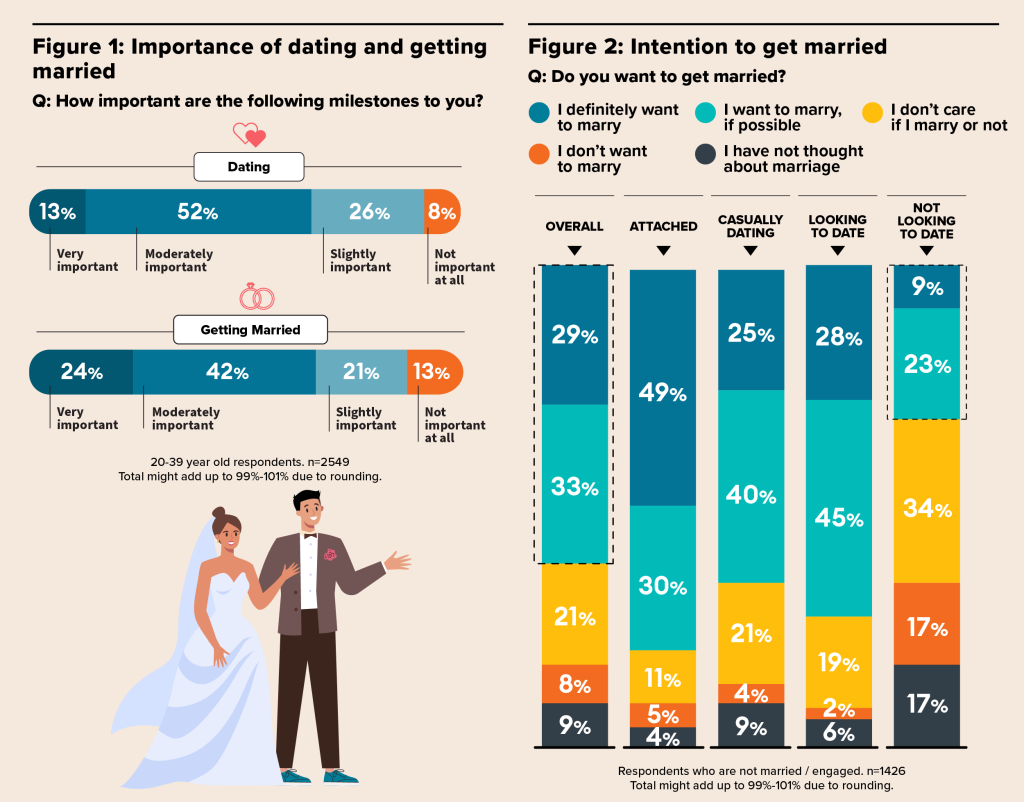
Close to 2 in 3 think that dating and getting married are moderately/very important milestones (Figure 1). Among those who are not married, 62% want to get married. Even among singles who are not looking to date, about 3 in 10 hope to get married if possible (Figure 2).
It is heartening to know that dating and marriage remain meaningful life goals for young people. So what’s stopping our young people from meeting their social aspirations?
Dating challenges
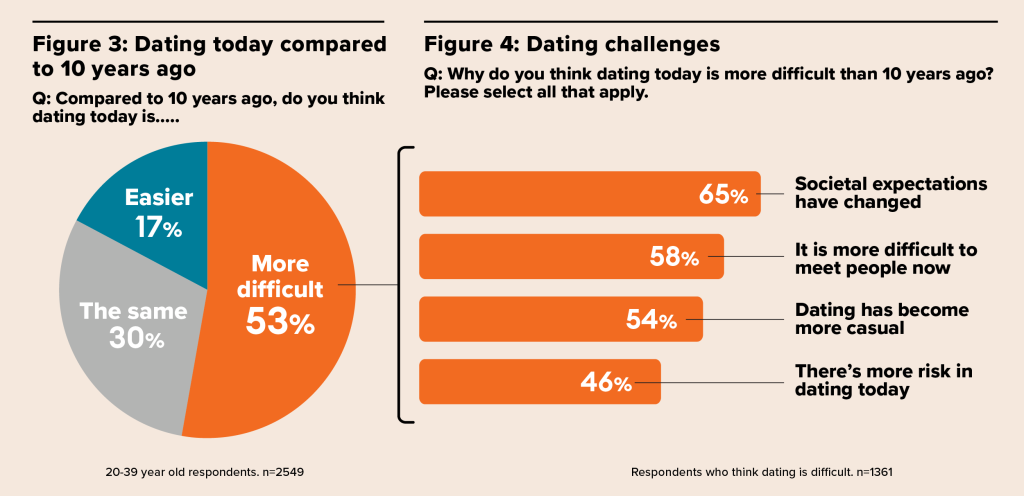
1 in 2 find the dating scene more difficult compared to 10 years ago (Figure 3). Change in societal expectations, increased difficulty in meeting people, and that dating has become more casual are the top 3 challenges (Figure 4).
To navigate this challenging dating landscape, what can be done to help young Singaporeans find their happily ever after?
Understanding what one seeks in a partner
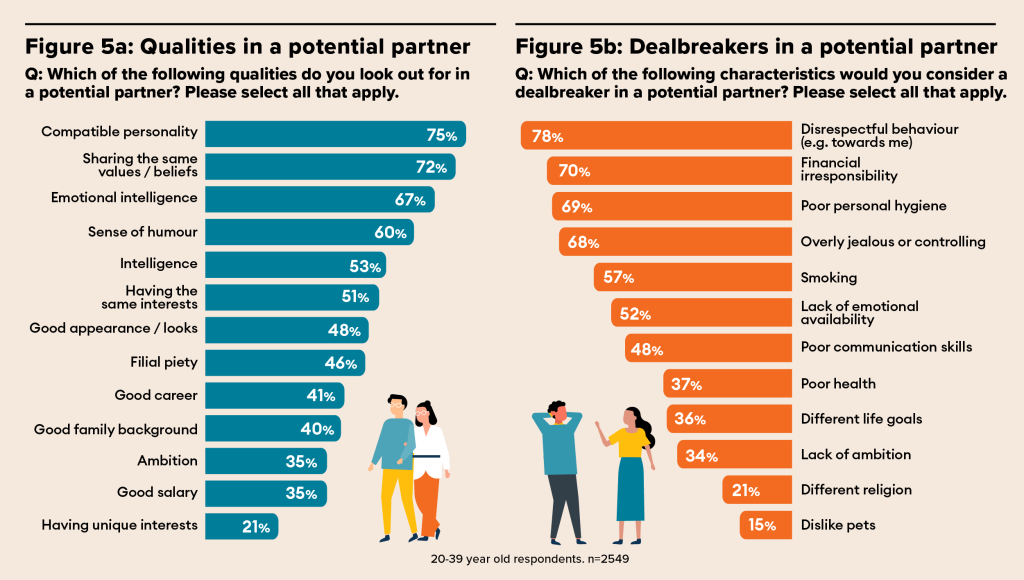
To start, it helps to understand what qualities young Singaporeans seek in a partner. The top 3 on the list are compatible personality, similar values and emotional intelligence (Figure 5a). Career and salary ranked lower on the list.
Equally important in this love equation is what young Singaporeans would not tolerate – disrespectful behaviour, financial irresponsibility and poor personal hygiene are among the top 3 dealbreakers (Figure 5b).
Through understanding their own expectations, young Singaporeans can align themselves with partners who genuinely reflect what matters most to them.
Seeking guidance from the social network
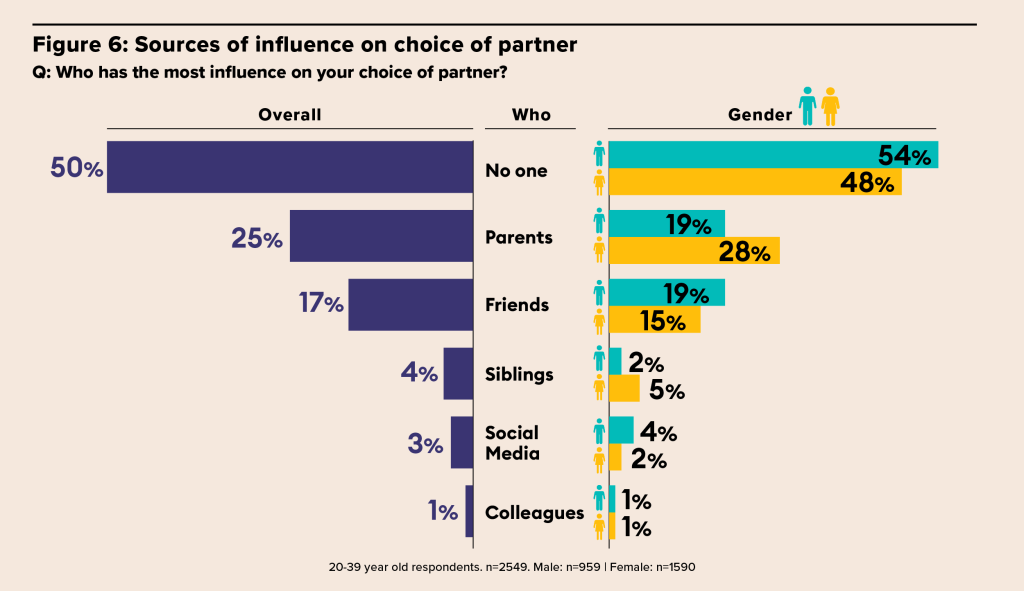
Dating is often seen as a private matter between two parties, but their social circles matter as well. While half indicated that no one has an influence on their choice of partner, the other half pointed to their social network as having an influence. Parents (28%) have a greater influence than friends (15%) among females, whereas both parents (19%) and friends (19%) have equal influence on males’ choice of partner (Figure 6). Given the meaningful role that the social network can play, parents and friends can share their own relationship experiences with young Singaporeans, offering support through relationship challenges.
Methods of meeting a partner
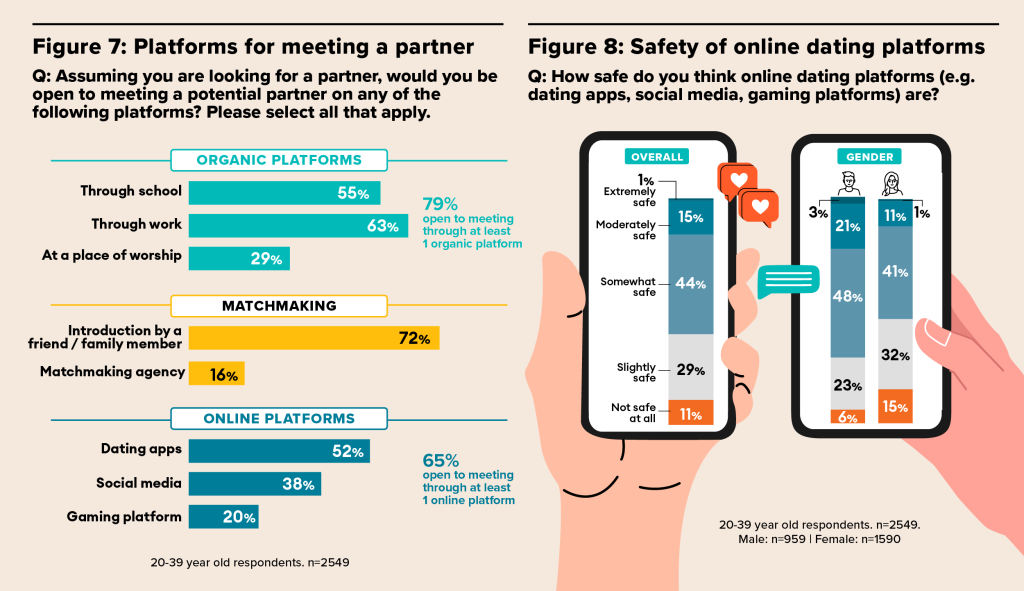
Organic meetings are the most preferred method of meeting a partner, with 79% open to meeting a potential partner through school, work or at a place of worship, and 72% open to introductions by a friend/family member (Figure 7).
In this digital age, online platforms have become increasingly common and a practical way to meet potential partners, with 65% open to using them (Figure 7). However, safety is a concern – about 16% think online platforms are moderately/extremely safe. Females are less likely to think so (Figure 8).
Towards finding meaningful relationships
While dating appears more complex and challenging today, the desire for connection is still significant among young Singaporeans. The insights from our research highlight the importance of understanding what young people seek in a partner, the influence of their social networks, and the role of both traditional and online platforms in meeting potential partners. By addressing these challenges and leveraging the support of their social circles, young Singaporeans can better navigate the complexities of modern dating and work towards finding their happily ever after.