
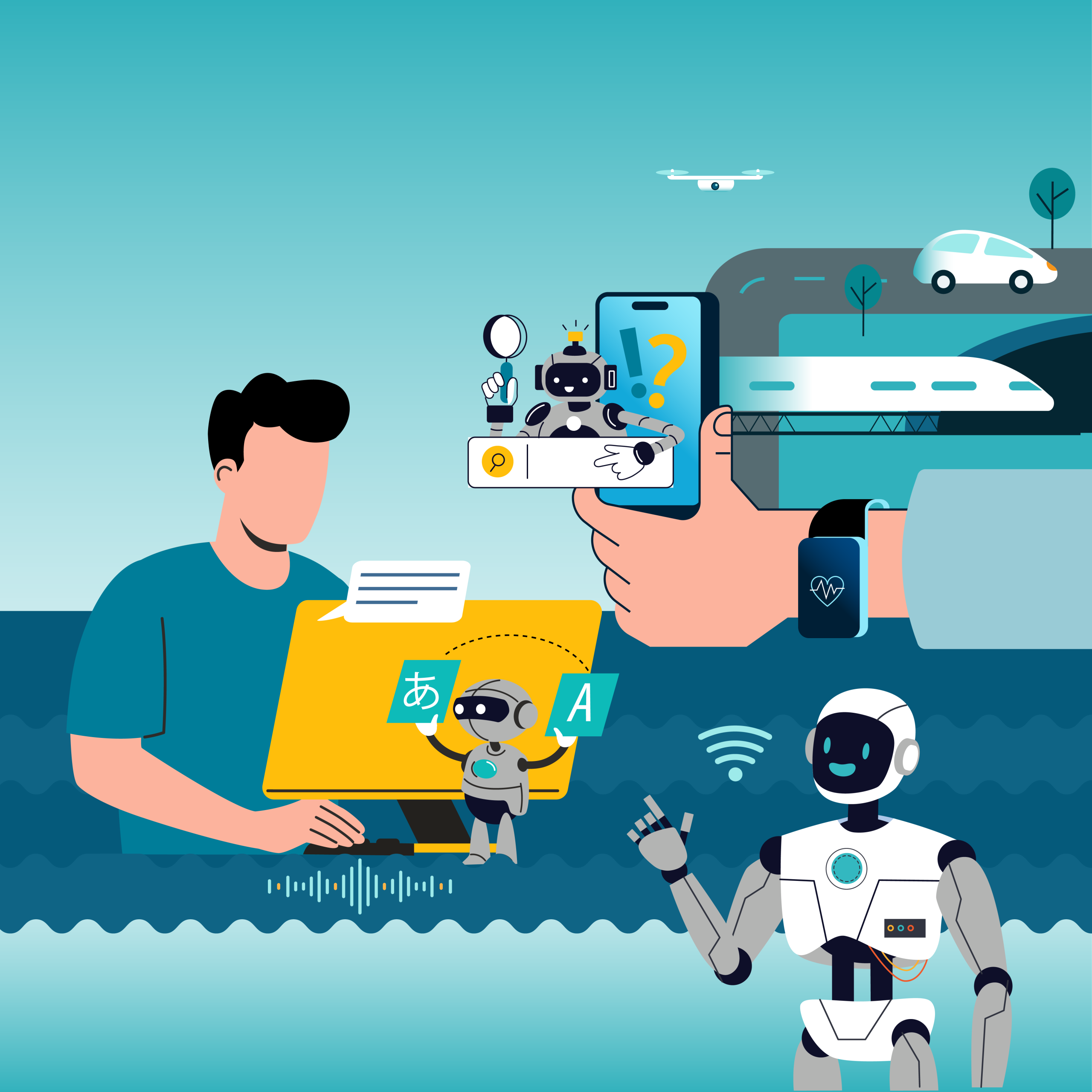
Artificial Intelligence (AI) is a transformative force reshaping our lives. Globally, businesses and consumers are using AI-powered applications daily, in ways that were unprecedented and unimaginable a decade ago. In Singapore, the government is leading the charge with an updated National AI Strategy (NAIS) 2.0, a comprehensive plan to integrate AI across various sectors.
Are Singaporeans ready to embrace a future with AI permeating our daily lives? To find out, RySense surveyed 1050 respondents from our online panel, HappyDot.sg, in August 2024.
Understanding of AI is still limited
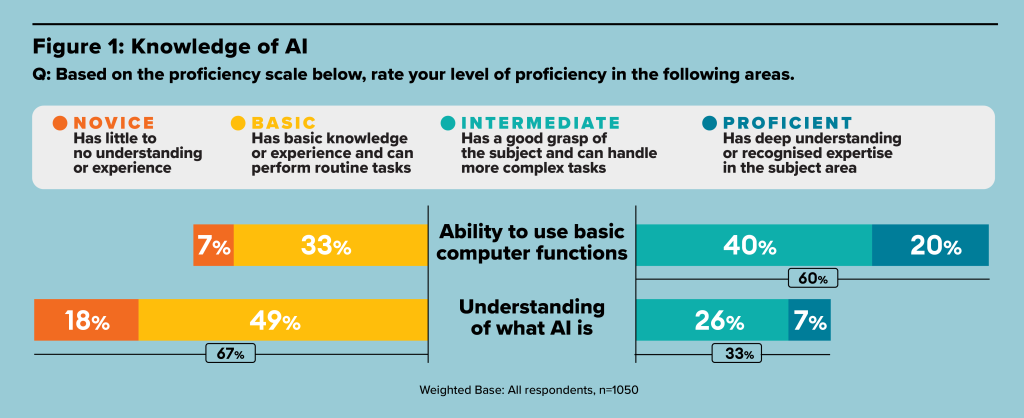
The understanding of AI among Singaporeans has yet to keep pace with its rapid introduction to our daily lives. 2 in 3 (or 67%) Singaporeans say they only have novice or basic levels of proficiency in AI. The remaining 33% report having intermediate or proficient level of knowledge, indicating a good or deep understanding of AI. As a comparison, 60% of Singaporeans have intermediate or proficient understanding of basic computer functions (Figure 1), a proportion nearly double the proficiency level observed for AI.
Singaporeans are receptive to AI, seeing it as an opportunity to improve their quality of life
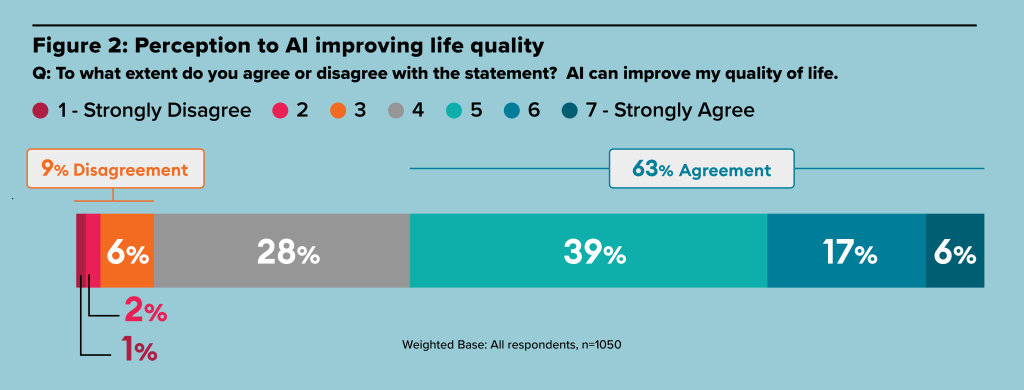
6 in 10 Singaporeans are receptive to AI in improving their quality of life. The remaining Singaporeans are ambivalent (3 in 10) or less forthcoming (1 in 10) (Figure 2).
8 in 10 would like some form of AI assistance in their lives (Figure 3). Contrary to the belief that AI is used mostly for work, a sizeable 42% would want AI to support them in both work and personal life – a view held more among males than females (45% vs 39%).
A smaller but notable segment wants AI to feature in just one part of their lives, allowing them to concentrate on either personal (19%) or work pursuits (12%). With women actively participating in the workforce while balancing roles at home, more women than men express a desire for AI to manage household tasks, allowing them to better focus on their careers (15% vs 9%).
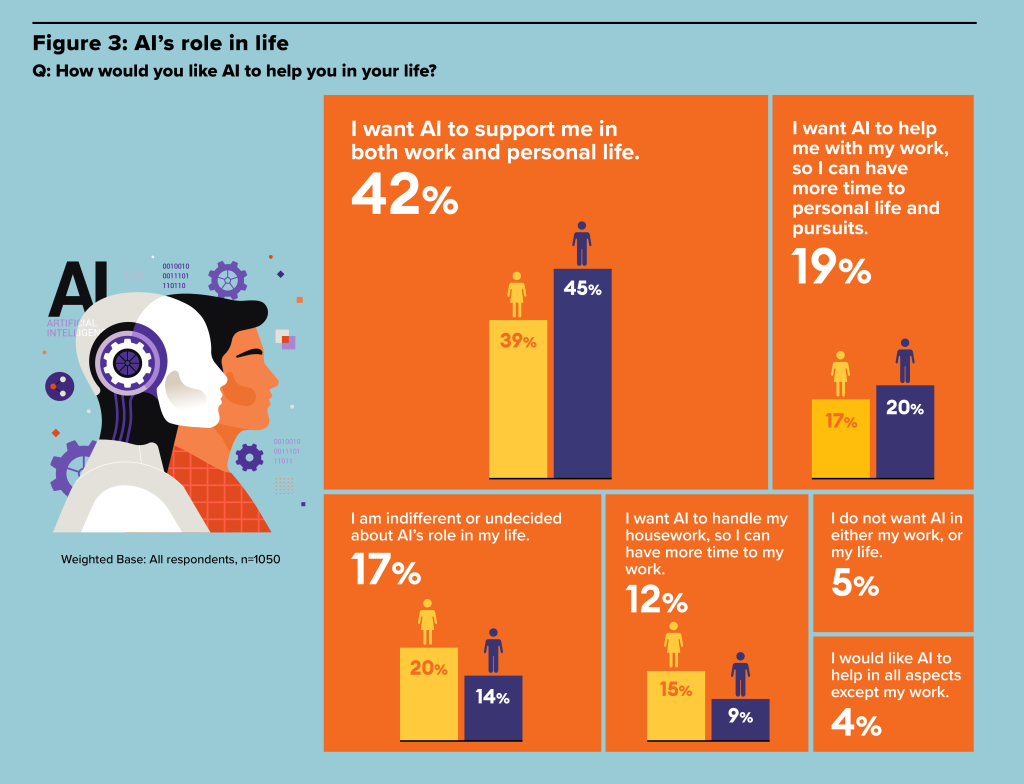
Regardless of the underlying motivations for such gender differences, these observations underscore how AI can be harnessed to address the universal need for managing life’s complexities and improving efficiency in various areas.
Concerns over the use of AI
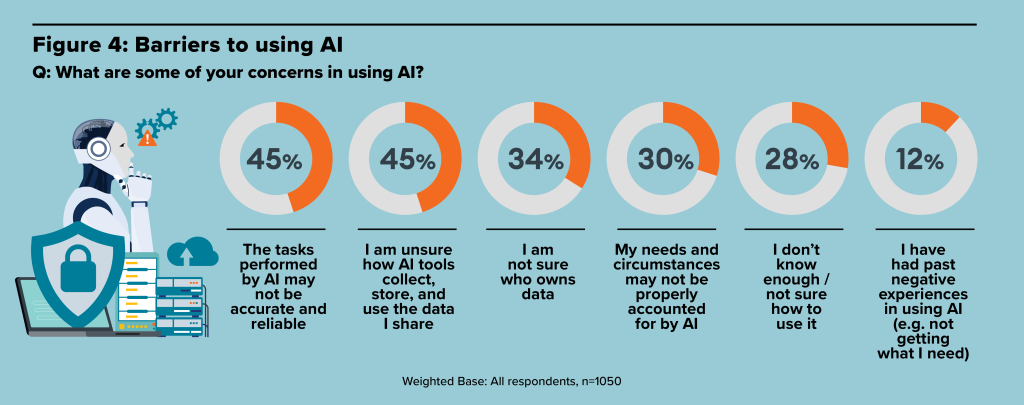
Despite the openness to adopting AI, Singaporeans expressed several concerns.
45% are worried about AI hallucination (inaccurate or unreliable AI output) and data privacy and security issues (uncertain about how these AI platforms maintain the data shared). Another 3 in 10 are unsure about how to use AI, further attesting to the importance of raising awareness and familiarity with this technology (Figure 4).
Preparing Singaporeans for a future with AI
What does this mean for Singapore, and where do we go from here? Singaporeans are generally receptive to using AI, with 6 in 10 acknowledging its potential to improve their quality of life. This openness is likely driven by Singaporeans’ pragmatic culture, through which we view new technologies and opportunities as avenues to enhance both work and personal lives.
The next step is transforming openness into adoption. This could include increasing exposure to AI, demonstrating its relevance across different roles and showing how it can be both easy to use and beneficial in everyday life. At the same time, concerns such as data privacy, quality of AI output and the risk of scams must be managed through sound governance frameworks that safeguard against AI’s potential harms.
As more people experience the value of AI in their daily lives, momentum for broader adoption will grow, paving the way for a more AI-enabled society.