

With shrinking family sizes and a population that is living longer, more Singaporeans will take on caregiving roles. As more Singaporeans come to know a caregiver, rely on one, or become one themselves, are we prepared for the road ahead? To find out more on the caregiving landscape, RySense conducted two polls in 2024 with respondents from our online panel, HappyDot.sg.
Amongst the 2,000 respondents polled, 34% reported being a primary caregiver—someone who takes primary responsibility for a person unable to fully care for themselves. This can mean providing care directly or ensuring provision of care, and making care and treatment decisions. Dependants under care include children, teenagers, adults and seniors.
Caregivers’ commitment driven by responsibility and affection
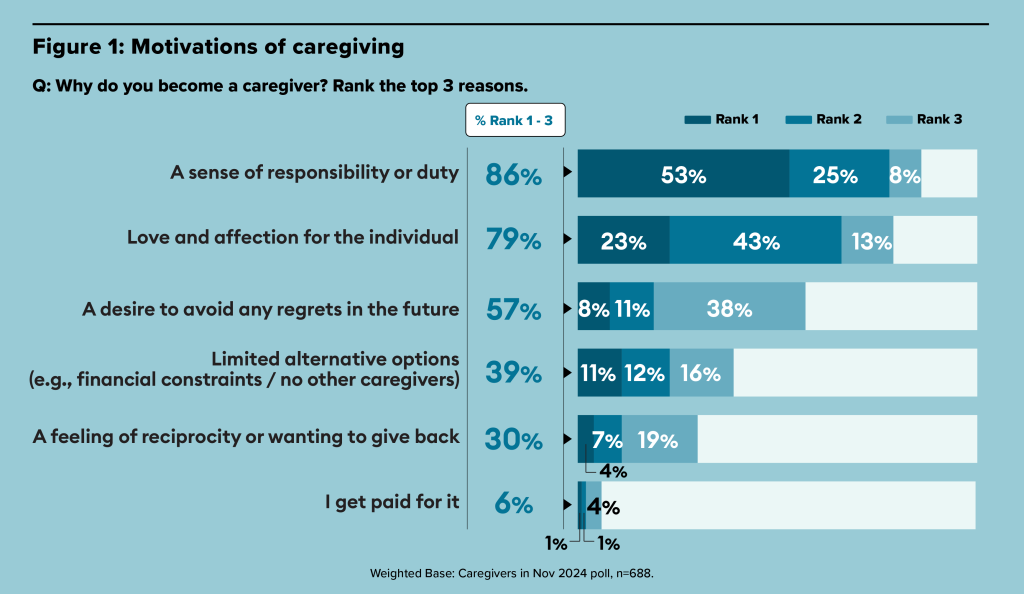
Caregivers are primarily driven by intrinsic motivations, with 86% reporting a sense of responsibility or duty and 79% citing love and affection for the individual as key reasons for providing care (Figure 1). 3 in 10 also mention feelings of reciprocity or a desire to give back, reflecting the enduring influence of filial piety within society.
However, not all caregiving is voluntary. For some, pragmatic considerations—such as wanting to avoid future regrets (57%) or lacking alternative options (39%)—play a significant role.
Daily demands draining the mind and body
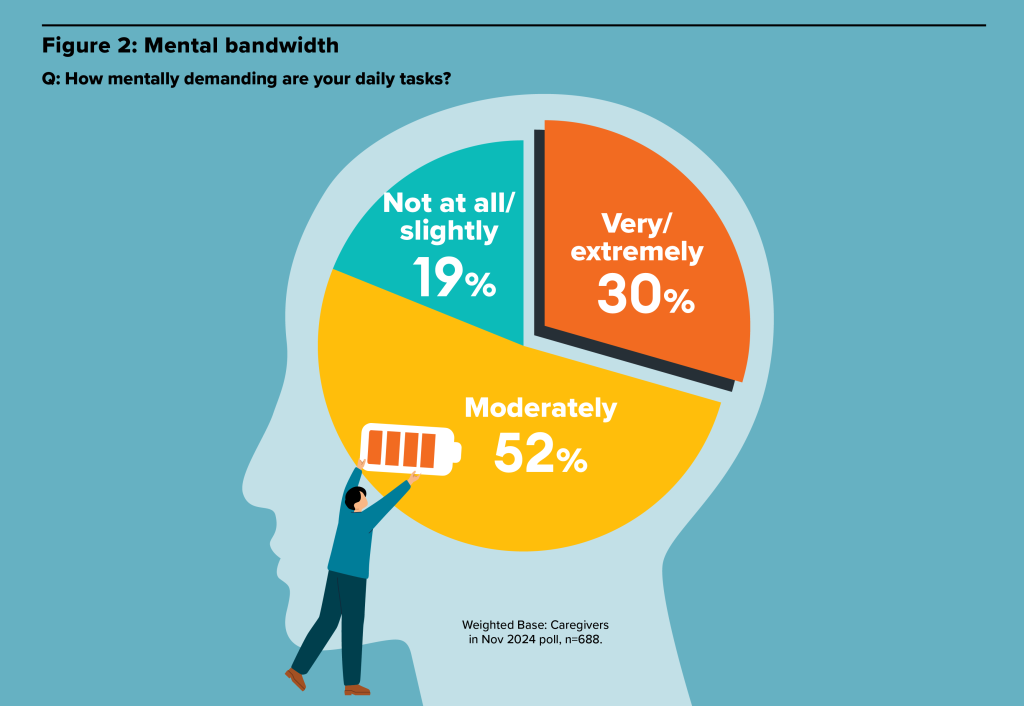
The fact that intrinsic motivations dominate does not mean caregiving is less strenuous. A closer look at caregivers’ daily lives reveals how demanding their role can be. About 1 in 3 describe their daily tasks as very or extremely mentally demanding, while another half find their tasks moderately challenging (Figure 2).
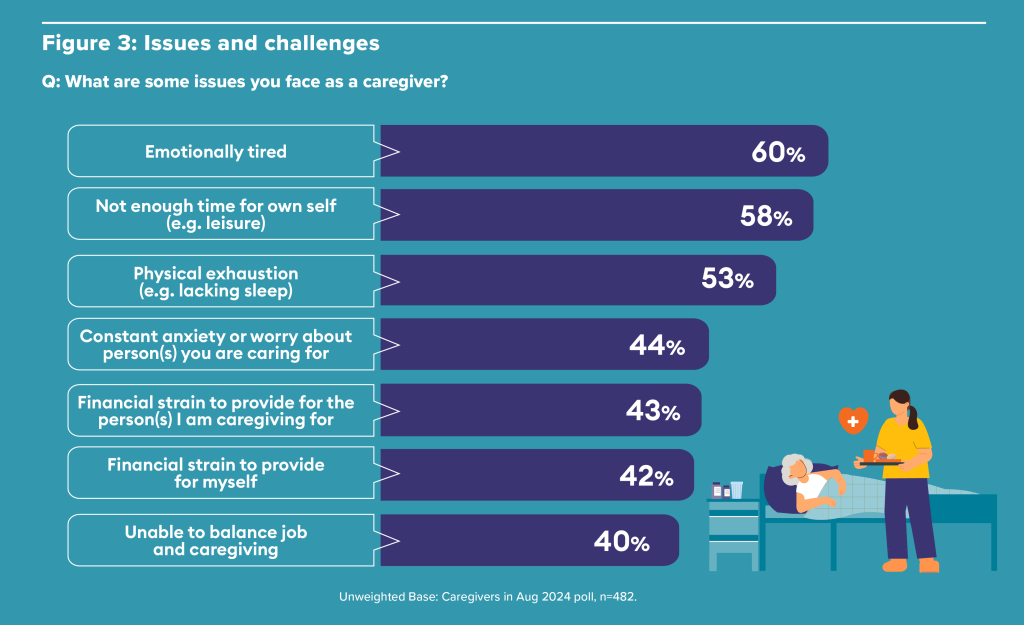
For most caregivers, the daily grind takes a significant toll: many reported feeling emotionally (60%) or physically drained (53%) and struggled to find time for themselves (58%) (Figure 3).
Caregiving’s impact on well-being and outlook on life
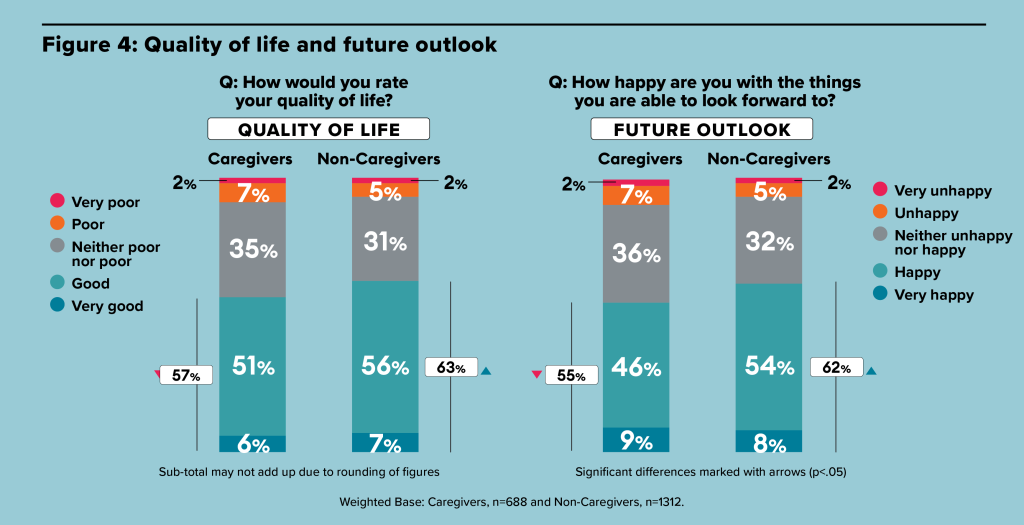
When asked about their overall quality of life, 57% of caregivers reported good or very good well-being—significantly lower than the 63% reported by non-caregivers (Figure 4). Caregivers also have a less positive outlook on life: just 55% are happy with the things they can look forward to, compared to 62% of non-caregivers. This suggests that even as caregivers find meaning in their role, the demands and pressures associated with caregiving can take a measurable toll on their overall well-being and outlook on life.
With shrinking family sizes and a population that is living longer, more Singaporeans will take on caregiving roles. As more Singaporeans come to know a caregiver, rely on one, or become one themselves, are we prepared for the road ahead? To find out more on the caregiving landscape, RySense conducted two polls in 2024 with respondents from our online panel, HappyDot.sg.
Amongst the 2,000 respondents polled, 34% reported being a primary caregiver—someone who takes primary responsibility for a person unable to fully care for themselves. This can mean providing care directly or ensuring provision of care, and making care and treatment decisions. Dependants under care include children, teenagers, adults and seniors.
Caregivers’ commitment driven by responsibility and affection
Caregivers are primarily driven by intrinsic motivations, with 86% reporting a sense of responsibility or duty and 79% citing love and affection for the individual as key reasons for providing care (Figure 1). 3 in 10 also mention feelings of reciprocity or a desire to give back, reflecting the enduring influence of filial piety within society.
However, not all caregiving is voluntary. For some, pragmatic considerations—such as wanting to avoid future regrets (57%) or lacking alternative options (39%)—play a significant role.

Daily demands draining the mind and body
The fact that intrinsic motivations dominate does not mean caregiving is less strenuous. A closer look at caregivers’ daily lives reveals how demanding their role can be. About 1 in 3 describe their daily tasks as very or extremely mentally demanding, while another half find their tasks moderately challenging (Figure 2).

For most caregivers, the daily grind takes a significant toll: many reported feeling emotionally (60%) or physically drained (53%) and struggled to find time for themselves (58%) (Figure 3).

Caregiving’s impact on well-being and outlook on life
When asked about their overall quality of life, 57% of caregivers reported good or very good well-being—significantly lower than the 63% reported by non-caregivers (Figure 4). Caregivers also have a less positive outlook on life: just 55% are happy with the things they can look forward to, compared to 62% of non-caregivers. This suggests that even as caregivers find meaning in their role, the demands and pressures associated with caregiving can take a measurable toll on their overall well-being and outlook on life.

Supporting those who support others
From our research, it is evident that caregiving comes with sustained physical, mental and emotional demands that weigh on caregivers over time. As caregiving becomes an increasingly shared experience for more Singaporeans, strengthening our systems, support networks, and communities will become even more important to ensure that everyone is well supported – whether they rely on a caregiver, provide care or are simply navigating life’s transitions.